
How Microcurrent Neurofeedback Helps with Emotional Regulation in Kids
Big emotions are part of childhood, but some kids feel them more intensely, more often, or for longer than their peers. A small frustration can turn into a meltdown, a minor worry can become panic, or a routine transition can feel overwhelming. For parents, it can be confusing, especially when your child is trying hard yet still seems “stuck” in fight, flight, or shutdown.
Microcurrent neurofeedback is one option families consider when emotional regulation is difficult and traditional strategies have not been enough on their own. Christian Counseling of Tampa supports families who want an approach that is gentle, research-informed, and attentive to the whole child, including emotional, physical, and spiritual needs.
Alongside counseling, some families explore services like Micro Current Neurofeedback to help calm the nervous system and strengthen self-regulation. The goal is not to “fix” a child’s personality, it is to reduce the internal stress load so skills, relationships, and learning can take root.
Emotional Regulation And The Nervous System
Emotional regulation is the ability to notice feelings, tolerate them, and respond in a workable way. Kids learn it gradually through brain development, co-regulation with adults, and repeated practice. Stress, trauma, sleep problems, sensory sensitivity, and anxiety can all make regulation harder.
In many children, the nervous system becomes overprotective. Instead of staying flexible, the brain shifts quickly into alarm mode, which can look like irritability, impulsivity, tears, aggression, or withdrawal. Even “good days” may take a lot of effort, leaving a child exhausted by afternoon.
Because regulation is rooted in the brain and body, support often works best when it includes both skill-building and nervous system calming. Talk therapy helps children name emotions and build coping plans, while body-based supports can help the brain feel safe enough to use those plans.
Families sometimes pair neurofeedback with counseling supports such as child therapy, especially when emotions spill into school, friendships, or family routines.
What Microcurrent Neurofeedback Is
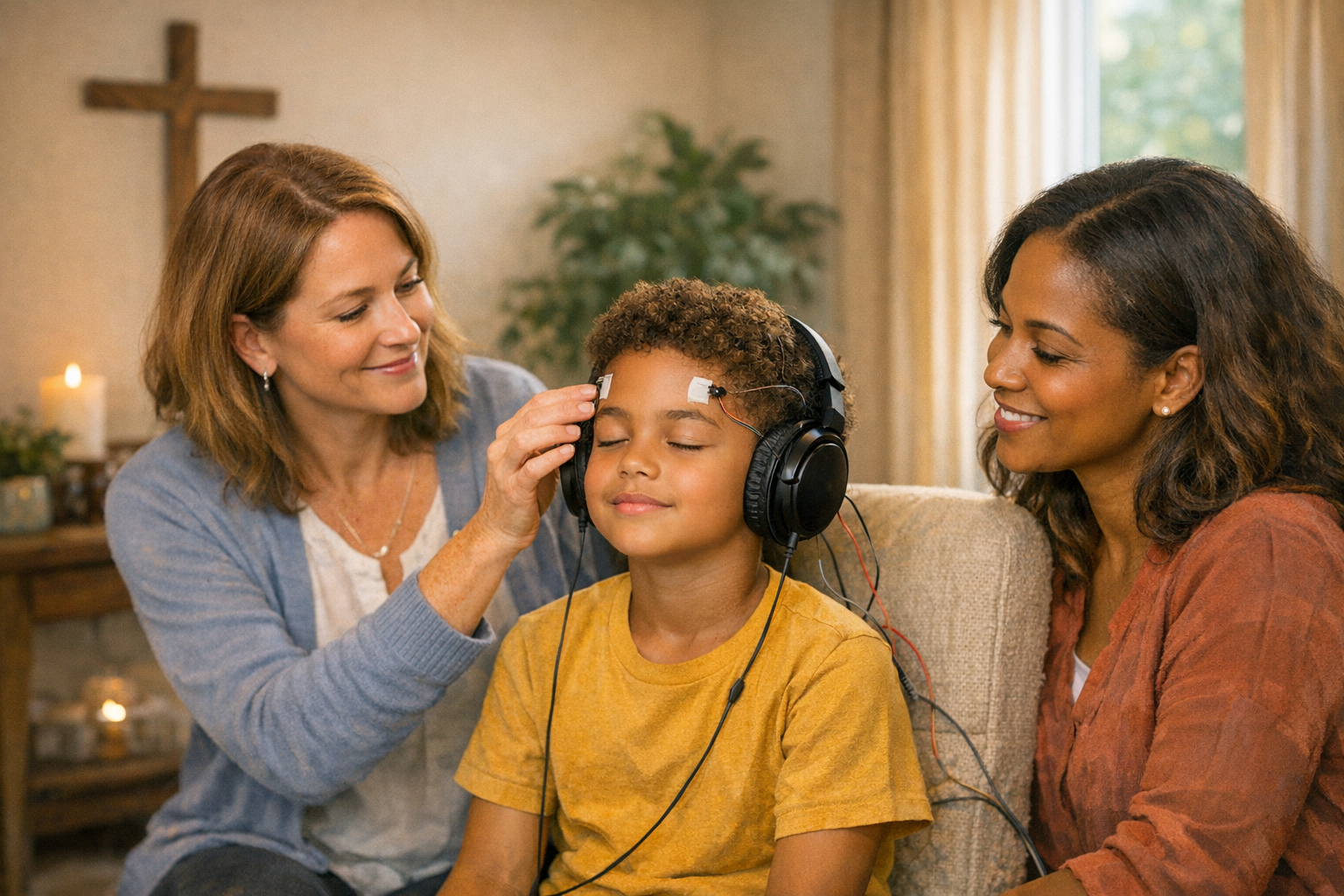
Microcurrent neurofeedback is a noninvasive method that uses very low-level electrical current to give the brain information about its own activity. Sensors are placed on the scalp, and the system reads brainwave patterns. Based on those patterns, it provides tiny feedback signals intended to help the brain “reset” toward calmer, more organized functioning.

Unlike some forms of neurofeedback that require active training over long sessions, microcurrent approaches are often brief and passive. Children typically sit comfortably, and many describe the experience as relaxing or neutral. Sessions are structured, predictable, and designed to feel safe.
It may help to think of it as supporting the brain’s natural self-correcting capacity. The aim is not control, but flexibility, so a child can shift out of high alert more efficiently.
Neurofeedback is not a stand-alone cure for every concern. A thoughtful plan considers medical history, sleep, stressors, and emotional patterns, then integrates supports so gains carry into daily life.
Signs A Child May Benefit
Every child has tough moments, so it helps to look for patterns over time. Emotional dysregulation often shows up in clusters, especially during transitions, demands, or social stress.
A child might benefit from additional nervous system support when you notice:
Frequent meltdowns that feel out of proportion to the trigger
Big worry, perfectionism, or panic sensations that escalate quickly
Aggression, impulsivity, or “can’t stop” behavior after stress
Shutdown, avoidance, or numbness instead of talking about feelings
Sleep disruption and morning or bedtime battles tied to overwhelm
These signs do not automatically mean a child needs neurofeedback, but they do suggest the brain may be working very hard to stay regulated. A comprehensive assessment can clarify what is driving the behavior and what supports are most likely to help.
For teens, similar patterns can look like irritability, isolation, or intense stress around school and peers, and resources like counseling for teens may be part of the plan.
What Sessions Can Look Like
A strong start includes a clear explanation for both parent and child. Kids do better when they know what will happen, how long it will take, and what they can do if they feel nervous. Clinicians also track goals, such as fewer explosive episodes, better sleep, or improved recovery after disappointment.
Sessions are typically short, consistent, and adjusted to the child’s responses. Some children show changes quickly, while others need more time. Progress is usually monitored through parent feedback, teacher input when appropriate, and the child’s own report.
Practical supports often run alongside neurofeedback, including:
Predictable routines and transition warnings
Emotion labeling and “body cues” awareness
Calming strategies practiced before a crisis hits
Parent coaching for co-regulation and repair after conflict
The most helpful plans keep expectations realistic. A calmer nervous system makes skills easier to use, but kids still need practice, encouragement, and patient adults who can model steadiness.
Supporting Regulation At Home
Home is where most regulation practice happens, especially in the moments that feel messy. Rather than focusing only on stopping behavior, it helps to ask what the behavior is communicating. Hunger, fatigue, sensory overload, shame, and fear can all disguise themselves as defiance.
Consider building a simple “regulation toolkit” that matches your child’s temperament. Some kids need movement, others need quiet pressure, and some need connection first. Short, repeatable routines tend to work better than big lectures.

A few evidence-informed practices to try include:
Name the feeling, then name the need, such as “You’re mad, you need space.”
Offer two choices to reduce power struggles.
Practice calming skills during neutral times, not only during meltdowns.
Repair after conflict with brief, warm connection and accountability.
Therapy can support parents too, especially if your own stress response gets activated. Learning to co-regulate is not about being perfect, it is about being present and consistent.
Microcurrent Neurofeedback Support In Florida
Microcurrent neurofeedback can be a meaningful support for kids who feel easily overwhelmed, reactive, or stuck in stress mode. Combined with counseling, parenting tools, and school collaboration, it may help the nervous system settle so emotional skills become more accessible.
To explore options, you can review therapy and counseling services and learn how different approaches fit together for your child’s needs. Christian Counseling of Tampa offers in-person sessions in Tampa, Florida, along with online therapy across the state.
For a personalized recommendation and to request an appointment, please contact us. We will help you think through what your child is experiencing and what supports could bring more calm to everyday life.
